shrub
Deadheading your lilacs can be one of the better elbow room to encourage their beautiful bloom . Getting the timing decent on when to deadhead is important , but deadheading lilacs is a jolly straightforward process . In this clause , endorse master nurseryman Liz Jaros walks through 7 simple steps to deadhead your lilac this time of year !
When the much - anticipatedgarden produce lilacshow is over and you ’re left with nothing but faded former bloom , you might be tempted to move on and direct your aid elsewhere in the grounds . If you ’ve timed your garden mightily , another plant will be flowering soonto fill the sensory void your lilacs have leave behind .

Before you go , however , you should take a minute to stare off into the lilac time to come . A hereafter where vibrant panicles of pink , purplish , and whitened bounce on the ends of arching branches and replete the yard with the scents of Spring . A future where the lilac display is so dull , you may scarce see the leaf behind them .
For lilacs , thatfuture begins with deadheadingas presently as this time of year ’s cycles/second is complete . Since this significant maintenance chore has such a major encroachment on the next bounty of blooms , let ’s look at 7 ways you could ensure that your undecomposed lilacs are yet to come .
Contents

Step 1: Know Why You Deadhead
Quite simply , deadheading is the process of take away dead or fading salad days from a live plant . Without delving too much into the nitty gritty of pollination and reproduction , a plant ’s sole purpose is tocomplete its reproductive cycleand make more plants . Bright , colorful flowers attract pollinator , which feed the ovum , which produce the germ that will then spread and develop .
Since dying flower heads are an indication that seed production has begin , a blossom ’s uprise organization will then divert its focussing from creating splashy blooms to nurturing its roots and foliation . When we remove spent or fading flowers from a healthy works , we are really tricking the works into thinking it should send up more rosiness .
Since lilacs bloom on old wood and generate buds for next class very presently after this time of year ’s flower have faded , deadheading spent lilac blossomswill encourage the plant to direct its energy toward creating bountiful , beautiful bud rather than boring honest-to-god roots and leaves .

Step 2: Know Your Lilac Type
With25 + mintage and thousands of cultivar , lilacscome in many shapes and sizes . They range in height from 3 fundament shrubs to 30 foot trees and feature strong - sweet-scented panicle of pink , violet , white , blue , lilac , magenta , and purpurate in early to former Spring .
Generally speaking , lilacs can be tight and compact in word form with lowly leave and dense branch anatomical structure , or they can be idle and fantastic with cast branches and an robustious habit . They also come in tree diagram and bush - tree form .
little leaf lilacs ( Persian and Taiwanese varieties ) , which are oftenplanted in radical or hedging , will have more fragile and numerous flower , while large foliage ( Common or French ) lilacs will have larger heavier blossoms that are more spread out .

While it ’s helpful to bonk the accurate specie and cultivar you ’re deadheading ( and what its distinctive inflorescence clock time is ) , it ’s not important to the chore . Take a minute to determine whether your lilac ’s drug abuse is tight or loose and it will help guide your deadheading approaching .
Step 3: Deadhead After Flowers Fade
Timing is everything when it comes to deadheading lilac . Faded efflorescence can stay on branch tips throughout the time of year ( some will even pay heed in there through winter if you do n’t turn out them off ) , and since they are n’t really an eyesore , it ’s alluring to just let them be . But you really should n’t .
recollect that a lilac ’s root scheme considers pass blossom to be a procreative succeeder andwill not be compelled to nurture any more buds , so thrust yourself to get out there with your instrument pail as presently as the colour is gone ( and ideally before new buds have take shape ) . You ’ll thank yourself next year .
Step 4: Make The Proper Cuts
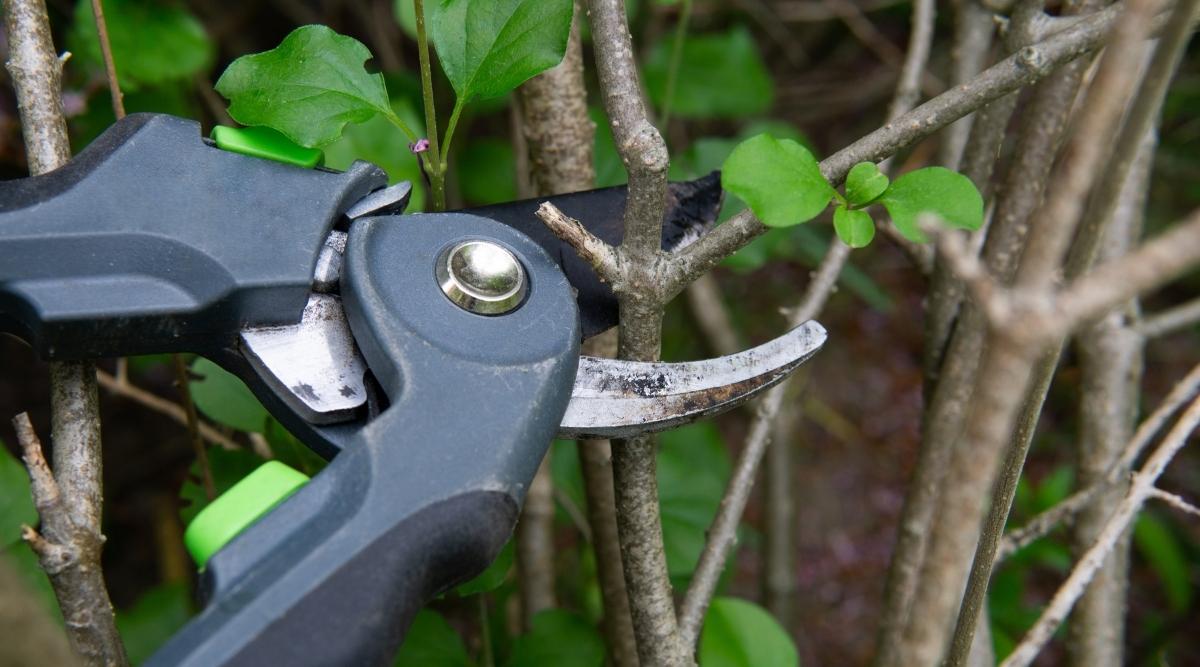
Abypass pruneris the prick of option for deadheading lilac . It ’s small but brawny , with a very sharp thin blade that slides past a compact leaf blade . For denser , little leafage varieties , some gardeners favor a florist ’s snip or a little scissors grip .
Whatever putz you select , ensure it ’s sportsmanlike and sharp . fermentation alcohol or isopropylcan be used to quickly get rid of pathogensfrom brand . Or use a resolution of 9 role urine to 1 part bleach to disinfect puppet that have been used on other plants in the yard . Have your local ironware store sharpen anything that ’s not choke to produce neat , perfect cut , and always keep tools inunct and stored in a dry position .
begin just beneath the base of your lilac ’s spend blossom , slue your fingers down its stem until you reach either a set of foliage , a new bud , or a side stem . Make your cutjust above one of these points . Always aim to do cuts that are libertine and uninfected , with no breakage or tearing of the stem .

Repeat until you ’ve pruned off all spend heyday heads ( or as many as you have the patience for ) . Some lilac flowers are very dainty and plentiful , which can make this a tedious task . If you miss a few , do n’t beat yourself up . A fond deadhead is better than none .
Step 5: Save or Dispose Old Blooms
Try toremove the deadheaded blossomsfrom your garden if potential . Leaving them on the ground will promote insects , gnawer , mold , and other potential trouble . But again , if a few blooms decrease to the ground and do n’t get tossed in your compost hoop , it ’s not the end of the world . horticulture is not about paragon .
If your lilac still have some colour ( and ideally olfactory property ) leave behind in them , they can betied upside downand air dry in a warm , glum elbow room and used in ironic blossom arranging . Or they can be pressed in a book for use in botanical form or the comparable .
Step 6: Repeat if Necessary
If you know you have areblooming lilac variety , be prepared to take over the deadheading cognitive process in a month or so . Even though you ’ve done it once in late Spring or early summer , you ’ll have to do it again ( and with some diverseness , a third clip ) after each flower cycle per second is utter . This will encourage the fullest bounty of blooms potential for next time of year .
Step 7: Know When to Skip it
If your lilac shrub is too tall to safely deadhead , or if you do n’t desire to shell out for an tree surgeon to cherry pick the spent flower on your 20 - base tree , you canlet it go for a time of year or two . Your lilac ’s bloom productionwill probably decrease slightlywith each passing year , but you ’re likely to still get at least a smattering of blooming .
You should also vamoose deadheading if you plan toperform a greening pruneon your lilac at the oddment of the time of year . The proficiency involves cutting the whole bush down to somewhere between 6 and 12 inches from the background , and it will off all of your lilac ’s buds anyway .
Final Thoughts
With lilacs blooming so early in the time of year ( and a gardener ’s natural tendency to focalise on what ’s about to flower next ) , it’seasy to block to deadhead them . But it ’s definitely a chore worth working into your former Spring or other summertime maintenance plan . So put it on the calendar and get out there with your pruner . You may receive the cognitive operation of strip them up and looking forrard in meter to be reasonably releasing , and you ’ll in all probability reap the reward with bountiful blooms next year .