If you ’re farm apple trees , I ’m sorry to say you ’re almost certainly going to become introduce with one ( or more ) of the pests on this tilt at some point .
I ’m not saying that in the casing of an infestation your trees are necessarily toast , but there are alotof pests that like them and many of these are pretty usual .
We link to vendors to help you rule relevant products . If you buy from one of our links , we may make a commission .
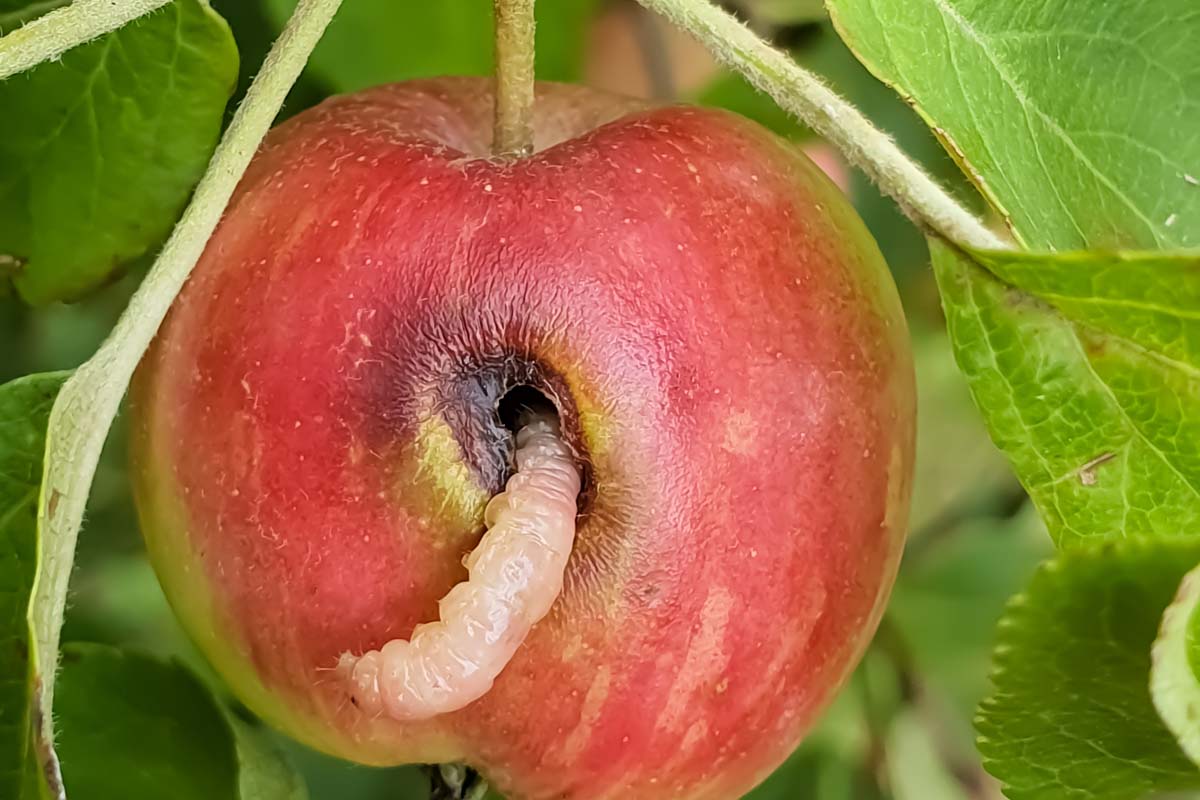
Photo via Alamy.
Do n’t be unhinged at me , I ’m just the courier . I have in mind , it ’s not just a conjunction that iconic apple imagery often admit the presence of a worm .
So , with the bad intelligence out of the room , I can tell you the serious news . For the most part , none of these blighter will drink down your trees . At worst , they ’ll normally just do a number on your harvest home .
Still , if you ’re like me , you do n’t want to apportion your harvest with a bunch of freeloading pests . So here are the most vernacular unity you need to watch for :

11 Common Apple Pests
There ’s no time like the present to start slaying our foes , so permit ’s jump right in :
1. Aphids
When I first saw woolly orchard apple tree aphids ( Eriosoma lanigerum ) , I have to include I was more fascinated than irritate , the latter being my usual reaction to the front of aphids .
Woolly aphid arealmostcute with their cottony , waxy coat .
Still , they do n’t get a pass just because of their interesting appearance .

Neither do the other types of aphid that feed on apples , like rosy Malus pumila aphids ( Dysaphis plantaginea ) and green apple aphid ( Aphis pomi ) .
Green and fortunate types fertilise on the shoots , buds , and foliage , causing distorted growth and curl farewell .
wooly apple aphids are a whole other matter . These pests feed on the shoots , branches , and stem .

They block off being cunning when you recognise that their feeding causes galls on the roots and twigs . These gall can crack open , exposing the tree to disease .
An infestation of woolly aphids can greatly reduce the health of ground trees and even toss off youthful specimens .
All three types of aphids go out behind a sticky honeydew that attractssooty mold .

A few aphid are no big mess , but if you have a large infestation you ’re in fuss .
If you have a woolly-haired aphid infestation , you ’re going to call for to ramp up your control . In addition to introducing good predators like lacewings , you could use insecticidal soap in the spring as the bud are opening .
Green lacewing ( Chrysoperla rufilabris ) adore aphids and so long as you have them in your garden , they ’ll stick around for the meal .

Green Lacewing nut
you’re able to purchase eggs that are ready to hatch into hungry adultsat Arbico Organics .
After the insecticidal soap software in spring , switch to a product that hold the good fungusBeauveria bassianato kill the adults .

BotaniGard ES
Something like BotaniGard ES , which isavailable at Arbico Organicsin quart- or gallon - sized option will do nicely . Spray once a month throughout the growing time of year .
To learn more about how to manage with aphids , visit our pathfinder .

2. Apple Maggots
Malus pumila maggots ( Rhagoletis pomonella ) are easily confused with codling moth larvae , which we discuss below , but they ’re different plague entirely .
The adult flies lie eggs in the yield , which cause small indenture on the aerofoil . When the ball hatch , the larvae burrow into the yield , prey as they go .
The apples finally become discolored , misshapen , and stinking .

Where codling moth larvae tunnel in and out of the yield , it ’s not rare for Malus pumila maggots to stick around . You go to take a big bite out of your apple and you ’re greeted with a wiggly , squiggly worm . Ugh !
If you are n’t certain which you ’re make out with , just look at the size . Apple maggot do n’t have a clear-cut head ejector seat and they ’re only about 10 mm in length , where codling moth larvae are double that sizing .
Barriers , traps , and sprays that contain kaolin mud can help you prevent these worms from making a base in your fruit . For gratuity and other command options , visit our templet to this pestis .

3. Blister Mites
Appleleaf blister mites ( Eriophyes mali ) and pearleaf blister mite ( E. pyri ) are itty bitty critter that ca n’t be regard with the au naturel eye , but the damage they do is certainly obvious .
When they feed on the leaves of your tree it causes blister to form that can be anywhere from crimson to putting surface in color . As the blisters age , they ferment dark chocolate-brown or inglorious as the septic tissue croak .
These tinge also feed on yield , get red sunken areas and misshapenness .

infestation are much more common in orchards where broad - spectrum chemical substance insecticides are used on a regular basis . If you head off using these , it ’s potential you wo n’t ever have to cope with them . Or , if they are present , they wo n’t do enough price to stimulate business concern .
That ’s because predator pinch are really good at keeping these gadfly in see if you do n’t kill them off unintentionally .
If you ’re seeing symptoms on a orotund portion of the foliage , do your best to restore balance to your garden by limiting insecticide use and planting coinage that will pull in good insects . aboriginal plantsare commonly the best pick .

you may also use a abeyant oil color in the springiness before the peak appear .
Dormant oil color is going to be your friend when growing apples , so keep some on mitt . I like Monterey Horticultural Oil .
Monterey Horticultural Oil

Arbico Organics carriesit in a crowd of different sizing option . Choose from quart - sized quick - to - use or quick to spray , or pint , quart , or gallon concentrate . I ’d in person recommend the last one .
4. Borers
Flatheaded borers ( Chrysobothris femorata ) and Pacific flatheaded borers ( C. mali ) are primarily image on trees that are already weakened or injured . These pests look for drained branches or areas that have been injured by insect alimentation or disease .
The ruddy - bronze , metal beetle are about half an in long .
The female lie down testis in summer that come forth as larvae a few weeks afterwards and stick out through the Ellen Price Wood of the plant . Young trees might be girdle at the graft union or main body , while sure-enough specimens will have girdled branches .

They leave long tunnels in the wood that reduce the tree ’s vigor and invite other pesterer and disease - causing pathogen to come in .
Keeping the tree in good health is the first step to avoiding borer since they prefer sick or discredited specimens . Young and/or stressed trees should be treat with a pyrethrin every two weeks , start up in belated June through August , to kill the adults .
Monterey Take Down Garden Spray

Arbico Organics carriesMonterey Take Down Garden Spray in 32 - oz. ready - to - habit bottles or as concentrates .
5. Codling Moths
I hate codling moth ( Cydia pomonella ) . I could write an entire book on how much I despise them . I do n’t love garden pestilence in general , but these meddling trivial larva really irritate me .
I do n’t like to use chemical insecticides in my garden and if you experience the same , chance are you ’ll be dispense with codling moths on your apple trees at some point . They ’re that prolific .
commercial-grade agriculturalist have learned how to keep this pest under command using synthetical insecticides , and you’re able to certainly do the same . If you need to judge a less chemical substance - intensive method acting , there are options .

But first , let ’s talk about what they bet like and the harm they cause . Codling moths are about half an inch long , with light and glum gray stria on their wings .
At the end of the wings are shiny bronze ordered series , which are in particular pronounce on the males . sound kind of pretty , veracious ? Do n’t come for that pretty face !
It ’s not the moth that you have to worry about , it ’s the larvae that do the legal injury . These half- to three - poop - in - long worms have a creamy white or pink body and a contraband mind capsule .

They burrow into the apple to feed on the seeds . When they ’re done , they tunnel back out and determine a place on the tree to spin their cocoon .
The harm they go out behind is black , lousy tissue where they enter and exit , and small holes called “ stings ” where they sample the yield before moving onto a undecomposed fruit . finical fiddling jerked meat .
You might see frass around the entry and release hole , and inside the orchard apple tree , the Congress of Racial Equality turns all rotten . The tunnels will also turn browned and rot , andfruit may drop from the tree .

After they ’re done , you ’re exit with an apple that is either entirely uneatable or that only has a few areas that you could slice out to eat . On the bright side , mychickensand Equus caballus appreciate the copiousness in years that I do n’t get around to controlling these cuss .
In warm regions , there are two generations , with just one in areas with a shorter develop season .
you’re able to becharm the adult with pheromone traps or expend pasty ring on the trunk to catch the larvae to monitor for the bearing of these plague .

Once you are sure you ’re dealing with codling moths , it ’s fourth dimension to get to work . In my area ( the Pacific Northwest ) , I do n’t vex monitoring . I get into they ’re present and I ’ve never been incorrect .
Most areas where apples are grown will have a government or university internet site that will secernate you when population are present in your domain , since it depart from year to year depending on the weather and amount of rain .
While good insect like WASP in theTrichogrammagenus can provide a modest measure of control condition , they wo n’t help enough to make a major difference . Instead , you need to trust on other method .

First , pheromones disrupt the adults ’ power to notice each other and mate .
Place traps out as before long as the flowers drop from the tree . Grab five or ten luresfrom Arbico Organicsand grade them inside a Scentry Plastic Delta Trap , also available at Arbico Organicsin packs of five or ten .
Scentry Plastic Delta Trap
you may also spray the tree with horticultural oil to smother the egg .
If you really want to avoid chemicals all told , you could bulge the individual fruit in meshing bags . It ’s pretty foolproof , but it ’s labor intensive .
You should also prune out any fruit that is tinct another objet d’art of fruit . The larvae just sleep with to use those spots for hiding as they start tunnel .
Surround WP
A product that contains kaolin clay like Surround WP , which isavailable at Arbico Organicsin 25 hammer bags , should be applied every six weeks , according to package instructions , once the grownup moths appear .
Alternatively , habituate a pyrethrin every eight week at the first sight of grownup moths , but only start applying it after the efflorescence have fallen – otherwise , you risk kill pollinator and reduce your harvest .
Spray at night because that ’s when the moths are flying about and verbatim contact is the most effective .
If you need to break out the big gun , spinosad and carbaryl are in force and should be apply in the same way as pyrethrins .
Be exceedingly persevering about cleaning up fallen fruit to deny the larvae a place to hide . Add in somebeneficial nematodes(the speciesSteinernema feltiaeto be accurate ) to kill the larvae overwintering in the soil and you will be well ahead of the problem .
These roundworm are an fantabulous answer for all kinds of wormy trouble , so it ’s never a bad theme to have some on helping hand .
NemAttack Beneficial Nematodes
Arbico Organicshas them in packs of five , ten , 50 , 250 , and 500 million .
It takes oeuvre , but you’re able to get these pests under restraint . But you could see why I sometimes opt to just gift my horse and chickens plenty of codling moth - damage apples in the fall .
you could also abbreviate out the damaged areas from the fruits and make codswallop or pies with the remnant bits . They ’re dead fine , though the apple wo n’t store long at all thanks to the tunneling .
6. Fruitworms
dotted unripened fruitworms ( Orthosia hibisci ) are n’t near as common as some of the other worm - similar critters that want a piece of your yield . But you should know about them because they can bankrupt your harvest .
The half column inch - long worm are the larva of grownup moths in the Noctuidae family . The larvae emerge in bound and are easy identified by their basswood green caput and green and blank speckled bodies . They also have feeble white lines run down their face .
The larva eat the folio and skin of the developing fruit have defoliation and yield deformity .
Beyond being less unwashed , another reason that these insect do n’t enrage me the mode codling moths do is that they ’re pretty prosperous to manipulate since they do n’t obscure inside the fruit .
Spraying with a product containingBacillus thuringiensis v. kurstaki(Btk)every two calendar week when the larvae are present is enough to get them under control .
Bonide Thuricide
chew the fat Arbico Organicsto plunk up a quart or gal ready - to - use , or eight or 16 ounce concentrate of Bonide Thuricide if you detect these pests are present and get to spraying .
7. Leafhoppers
As with aphid and wanderer mites , leafhoppers are another eccentric of sapsucking insect plague that feeds on the leaves and buds of orchard apple tree Tree . When they ’re around , they cause livid stippling to form on the leaf .
In apple , the white apple ( Typhlocyba pomaria ) and rose leafhoppers ( Edwardsiana rosae ) are the two types you ’ll find , and they ’re most common just before or during harvest meter . They ’ll leave behind honeydew and black spots ( which is their shite ) on the fruit .
They are n’t typically a trouble unless they come in around in large enough numbers pool .
If this is your first turn up to squash racket against leafhopper , do n’t panic . They ’re unwashed and pretty easy to control . fleeceable lacewing will make a quick meal of them , and some insecticidal soap will finish the job .
Spray every two or three weeks when they ’re present .
8. Scale
San Jose weighing machine ( Diaspidiotus perniciosus ) is an extremely rough-cut orchard apple tree pest in non - organic orchards and it can cause some serious damage .
The small , yellow grownup apply their tiny mouthparts to course on sprig , branches , and leaf , and while you ’d think by their sizing that they believably do n’t get too much wrong , a expectant enough infestation can pop a tree .
As they age , they release a protective waxy substance that finally turn from yellow to black . There can be up to four contemporaries per yr , so that ’s a lot of potential alimentation and damage .
When infested , the branches will start to snap and die and the overall tree will calculate sorry and stunt . leave behind unchecked , the pest might kill the Sir Herbert Beerbohm Tree entirely .
If you are n’t using organic gardening methods , consider switching . Because constitutional orchards avoid pesticide use , they be given to have enough near hemipteran around to keep the bag bug under restraint .
Otherwise , apply a sleeping spray in winter to smother overwintering adults .
you may learn more about how to manage with scale in our guide .
9. Spider Mites
Spider speck are extremely common on Malus pumila tree , but they are n’t all that damaging , for the most part .
These arachnoid use their piercing mouthparts to lactate the sap from the leave , creating chocolate-brown and chicken stippling . If you acknowledge these symptom and look nearly , you might also see fine webbing .
They can be present anytime during the grow time of year , but they bang red-hot , dry atmospheric condition easily .
Spider mites in the garden are n’t necessarily a bad thing , as they are an crucial food source for lots of good insects . But too many of them can indicate that you have an imbalance in your garden , and big infestations can seriously harm young or drought - accent specimens .
If you notice webbing and stippling on your Malus pumila trees , look closely for bantam move insects . Red spider touch ( Tetranychus urticae ) are most common , but there are fleeceable , black , and chocolate-brown ones , too .
spray with insecticidal soap or horticultural oil can pink down these pests , and beneficial vulture such as predatory jot , assassin bugs , and green lacewing can be used for biologic control .
Learn more about dealing with wanderer mites in our scout .
10. Tent Caterpillars
Tent caterpillars are perhaps some of the scarey sounding pests . Not just on this list , but in general . They weave giant web and one C of them will fall out together in these “ tents . ”
One day you ’re take the air around your garden and you look up , only to see a wiggly , wriggle volume of worms in what looks like the world ’s biggest spider web .
Ironically , they ’re probably the least troubling plague on this tilt .
Not only do they rarely cause serious equipment casualty to a Sir Herbert Beerbohm Tree , but you may just sweep them out with a rake and go about your day . check more about collapsible shelter caterpillars in our guideto decide what , if anything , to do if you find oneself them in your tree diagram .
11. Thrips
All kinds of thrips metal money are fan of apples , though pear ( Taeniothrips inconsequens ) and western flower thrip ( Frankliniella occidentalis ) are most common .
These one - mm - long , lissom pests apply their mouthpart to sop up out the sap of industrial plant tissue paper . They particularly wish to enter the buds to start feeding and lay their eggs . When this happen , the bud is often destroyed .
To learn more about thripid , chit-chat our guide for plenty of information about these vulgar insect .
Prevail Over Apple Pests
There are undeniably a large telephone number of orchard apple tree pesterer and they ’re far more common than we ’d like . But armed with these gratuity , they do n’t have to be a enceinte deal .
Knowing what to look for and how to manage the state of affairs stand for you could keep your harvest from codling moth or show troublesome aphids the doorway .
In the lag , you canlearn more about growing applesin the following usher :
© Ask the Experts , LLC . ALL right RESERVED.See our TOSfor more details . ware photograph via Arbico Organics . Uncredited photos : Shutterstock .
About
Kristine Lofgren
