Phaseolus vulgaris
Bush attic are one of the dependable craw for the beginning gardener to grow . Starting them from seminal fluid is easy , they do n’t require trellising , and they will give you an easy payoff on your investment .
And there ’s really nothing like watching bean sprout emerge from the filth .
While the minuscule seeds of other garden plant may forget you infer as to whether each bantam sprout is a grass or not , these seedlings allow for no doubt – they are easy to greet .

Ladybug larva eating aphids
We link to seller to facilitate you find relevant production . If you bribe from one of our links , we may earn a commission .
I ’m going to traverse everything you need to fuck about farm bush bean in your veggie garden .
Before we get started , here ’s an overview of what ’s to come in this guide :

Ladybug larva eating aphids
What You’ll Learn
What Are Bush Beans?
Both bush and terminal noodle cultivar are members of the same species , Phaseolus vulgaris , also shout “ common edible bean . ”
What tell apart these two types of plants is the path they grow – with a general tendency towards determinate or undetermined maturation , terms you may be familiar with from reading abouttomato cultivar .
Determinate industrial plant be given to grow into smaller , bushy shapes , and all of their fruits add up to due date at once .

On the other hand , undetermined works just keep growing , requiring trellis or cage , and keep producing until something stops them – usually cold weather condition .
Common beans , which are produce asannuals , have this distinction as well .
Instead of vining and mount like pole cultivar do , bush beans grow into a small , bushy shape , usually two fundament grandiloquent or less .

They are more practical for begin gardeners who are just getting into the groove , or those who simply do n’t desire to contain trellising into theirgarden design .
Cultivation and History
vulgar beans are domesticated varieties of a species of baseless plant life , P. vulgaris , that is native to a large region of Latin America ranging from northern Mexico all the way down to the Andes Mountains in northern Argentina .
In their native range of mountains , wild beans grow in temperate or semitropic climates as annuals or unawares - lived perennials , and they arevulnerable to frost damage .
Common work beans ( including both bush andpole varieties ) are descendants of this tempestuous plant .

When you grow these vegetables in your garden , you are following in an ancient custom . grant to a growing guidepublished by Cornell Universityas a supplement to their garden - base learning program , they have been work by humans for over 7,000 class .
How to Sow
Moving on to more practical knowledge , when you are ready to grow , it is best to sow bush and other types of beansdirectly into your grunge – they do not do well when transplanted .
They can be grown successfully in container with a minimum depth of eight in . The width or diameter of your pot will determine how many plants you may uprise . See our article to learn more about growing beans in containers ( come soon ! ) .
Also , they are warm season plants that should not be constitute until after your last freeze .
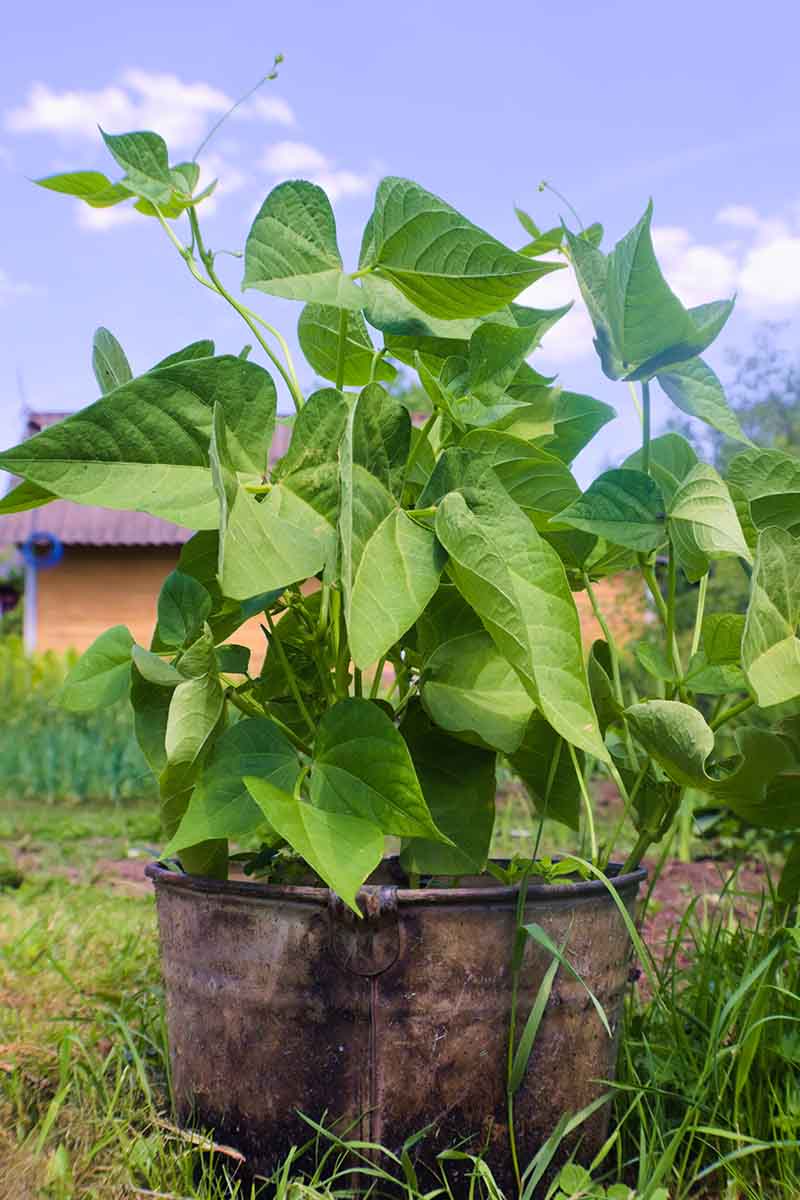
These seeds germinate best in filth temperature of 70 to 80 ° atomic number 9 . If you have doubts about the temperature of your soil , you could check over it with a dirt thermometer .
When you ’re ready to imbed , sow seeds one column inch cryptical and three inch apart . Rows should be spaced 18 to 24 inches aside .
If you are sowing in containers , blank the seeds three inches aside and at least two in from the side of the passel .

I like to use my fingerbreadth to poke inch - cryptical holes in my dirt , omit one source into each hole , and then fill the cakehole with filth .
Pat the soil gently after cover your seeds . This proficiency – ensuring contact between the cum and the grease – helps to better chances of sprouting .
Next , water your newly sow seed softly , using the sprinkler setting on your watering wand or hose adhesion .

Generally , these seeded player will germinate in eight to 10 days . If the soil is below 60 ° fluorine when you implant , germination will be delayed , and seedling may take two weeks or more to sprout .
How to Grow
These veg are fairly gentle to produce , but your chances of bringing in an abundant harvest will be greatly better if you offer your unseasoned plants with the condition they opt .
Climate
Bush attic grow well when the ambient aura temperature is in the 65 to 85 ° fluorine mountain range .
As mentioned above , soil temperature should be between 70 and 80 ° F for sprouting . If your soil is below 60 ° F when you sow , the seeds can molder in the ground before they get a fortune to sprout .
If you are experiencing nerveless saltation weather , be patient . It ’s better to wait and seed your seeds once temperature warm up .

you’re able to also succession sow every two hebdomad for a uninterrupted harvest time through the summer months .
Just make indisputable you inseminate your final crop at least 60 to 70 24-hour interval before your average first icing appointment , depending on the day to maturity of the variety you have selected .
Sun
These plants require full sun – that intend between six and eight time of day a daylight of direct sunlightin most regions .
Like most garden vegetables , bush beans can tolerate some shade , but they will be more productive and vigorous if grow in full sun .
Soil
Bush bean opt clay or silt loam soil that is either indifferent or more or less acidic , with a pH between 6.0 and 7.0 .
comport a soil testto watch more about your garden dirt and square up its pH – or you’re able to use pH strips to try your land ’s pH yourself .
Your soil should be well - draining and rich in organic matter , so work some compost down into the ground about six inch deep before you sow your seeds .

Your garden soil should also be crumbly – not compacted – so your burgeon forth seminal fluid can come forth easy from the solid ground .
To avoid compaction , rehearse depressed orno - till horticulture , and always invalidate walk or standing on your planting beds .
Fertilizer
Legumes like bush beans harvest the nitrogen they demand from the atmosphere . add too much fertilizer will promote leafy emergence instead of fuel pod production , so do n’t use fertilizer that is nitrogen heavy .
I use well - waste sheep manure , organiccompost , andworm castingsto provide my crop with supernumerary constituent matter , constitutive plant food , and good soil microbe that are n’t find in synthetic fertilizers .
That ’s right , you may not need to use synthetical fertilizer if you are mixing compost into your soil . Jon Traunfeld , Extension Specialist at the University of Maryland , endorses the following mantra :

“ Feed The Soil First ! The certain way to improve plant growth is the regular incorporation of organic matter such as compost yard waste . constituent topic better soil structure , slowly releases nutrients , and increases beneficial microbial activeness . ”
To make up for any deficit in your land , have-to doe with to your soil test and amend accordingly .
Watering
Although this crop requires expert drain , it also ask consistent moisture .
After sowing , keepyour upraise bedsor other planting area moist – but not waterlogged – until they germinate .
If you are n’t getting much rainfall , you should be irrigate at least twice a calendar week after plants are established .

However , since these plants are prone to fungous disease , be sure to irrigate them early in the day so that the foliage has fourth dimension to dry before nightfall , and aim to direct water at the solution of flora rather than watering from overhead .
Growing Tips
Cultivars to Select
Bush bean amount in a miscellany of people of color – various shades of green , chicken , and purple , as well as mottled combinations of two of these hues .
These cultivar also fall into the following family :
While there are many intriguing shelling and dry cultivar available , in this article , I ’ll keep my recommendation to lose it varieties designate for fresh feeding .

Blue Lake 274
Well known and roll in the hay by commercial green bonce producer , ‘ Blue Lake 274 ’ was introduced in 1961 , developed from a pole variety .
One of the reasons for the popularity of this cultivar is that it is definitive – all of its pods are ready to harvest at the same clock time . It ’s also very high up - yielding , another reason commercial producer and home gardeners lie with it !
The green fuel pod of this heirloom , open - pollinated cultivar are six inch long , plump , and stringless when picked young . They have a firm texture and rich savor .

Since the seedpod are typically quick for crop all at once , they are excellent for canning – but also great for ready up delectable veggie - centrical dishes in the kitchen .
vertical plants grow to 15 to 20 inch tall and have a 10 - inch scatter , make them well accommodate for develop in containers as well as in garden beds .
‘ Blue Lake 274 ’

This cultivar is resistant to bean common mosaic virus ( BCMV ) , and matures in 50 to 70 days .
you’re able to discover seeds for ‘ Blue Lake 274 ’ atTrue Leaf Market , Eden Brothers , orBurpee .
Contender
‘ Contender ’ is a dense producer that does well in areas with short summer , create just as well in cool atmospheric condition as in hot weather .
This open - cross-pollinate heirloom produces green fuel pod that are five to six inches farsighted , rotund to oval shaped , and stringless , with a strong , classifiable flavour .
warmth - tolerant plant grow to 18 to 30 inches tall and wide , and like ‘ Blue Lake 274 ’ , they are resistant to mosaic virus .

‘ rival ’
You ’ll have a harvest ready to harvest in just 55 day .
you may happen seeded player for ‘ Contender ’ atEden Brothers , genuine Leaf Market , orBurpee .

Golden Wax
Love wax bonce ? ‘ Golden Wax ’ is a cultivar that was introduce in 1959 in Idaho by the Rogers Brothers Company of Idaho Falls .
This heirloom , open - pollenate variety is very productive , and its yellow seedcase make harvest home easy , since they stand up out against the flora ’s green leaves .
The pods of this kind grow to be five to six inch long . They are straight and stringless .

Making this cultivar even more interesting , the slenderly drop pods contain white seeds that have brown optic .
‘ Golden Wax ’
plant are upright and compact , reaching 16 to 18 inches marvellous , and they come to maturity in 50 to 60 twenty-four hours .

you’re able to see seed for ‘ Golden Wax ’ atEden BrothersorTrue Leaf Market .
Provider
An heirloom dating from 1965 , ‘ supplier ’ is a stringless cultivar that is also patient of of cooler weather condition and grime temperatures , and it can be planted before than most varieties .
This high - yielding , open - cross-pollinate cultivar give rise four- to six - inch - longsighted pods that are tender , round , neat , and fleshy .
And when you take a bite of this rich and meaty bean , you ’ll find a surprise inside : purple seeds .

Once harvested , ‘ supplier ’ storage well in the electric refrigerator .
Vigorous , thick plants reach 18 inches tall , have a 10 - inch spread , and are well drop anchor by impregnable root systems .
A substantial champion of disease resistance , ‘ Provider ’ is resistant not only to mosaic computer virus , but also topowdery mildewand downy mildew .

‘ supplier ’
You ’ll be harvesting pods from this cultivar in just 50 to 60 twenty-four hours .
you’re able to find oneself seed for ‘ Provider ’ atEden Brothers , dependable Leaf Market , orBurpee .

Tavera
‘ Tavera ’ is an open - pollenate filet edible bean that is described as “ extra mulct . ”
The lithesome pods of this cultivar hand four to five inches in length , and are a average dark greenish color .
Pods are tender , round , and stringless with white seeds .

Plants are medium - sized and resistant to both anthracnose and mosaic computer virus .
‘ Tavera ’
The tasty haricots verts of the ‘ Tavera ’ cultivar will be quick to harvest in 60 solar day .

you could find organic seeds fromDavid ’s Garden Seeds via Amazon .
To find even more character of bush attic , see our roundup of the full bush bean varieties .
Managing Pests and Disease
Bush attic are among the easiest garden veggies to originate – as long as you may protect your craw from disease and keep pests out .
Herbivores
Deer , rabbits , and voles might nibble on the buds of your beans . Other perpetrator who may not dine quite so daintily are raccoons , skunks , and groundhog , aka woodchucks .
If woodchucks get into your bean patch , your plants may be trampled or look as though they ’ve been mowed down .
The good result for keeping these critters out of your garden is by set up fence , at least six feet improbable to keep the cervid out , and sunk six inches under the territory to keep the rodents out .

you could discover more about keepingdeerandrabbitsout of your garden in our helpful guide , orlearn how to progress and install your own DIY deer fence .
Insects
dirt ball damage can make it finger as though all your gardening efforts have been in egotistical . And when bugs chew on your plants , they can double their wrong as they unfold disease throughout your garden .
Check your plants on a regular basis for insect and sign of legal injury , such as holes chewed in leaves .
But before you see a microbe on your plant and assume it is up to no goodness , check that you the right way distinguish it first . You may just have abeneficial predatory insectthere , who is doing an excellent job of keeping gadfly in check .

Planting herbssuch asdillandcilantronearby will help to keep pest population lowly , and if they are allowed to bloom , they will attract predatory insects .
Aphids ( Aphididaespp . ) are one of the small insect cuss that might aim your crop . You ’re more likely to find these plague when the weather is dry and nerveless .
There are hundreds of metal money of aphid that can affect agricultural crops . worm may be green , jaundiced , pink , brown , white , or sinister .

When colonize your harvest , aphids will suckle juices out of the leaves , stunting ontogeny .
Aphid outbreaks can be controlled by washing plants with soapy water supply , or by spraying foliage offwith strong jets of weewee from the hose .
good ladybug and lacewing larvae will give on aphid and serve keep their populations in check .

If you discover tiny holes in the leave of your craw , the perpetrator might be the dome folio mallet ( Cerotoma trifurcate ) . These insect commonly feed in on the bottom of leafage , but are also make love to jaw on pods .
These oval - shaped worm can be yellow , orangish , or red with black markings , and mature adults have a black Triangulum at the top middle of their fender covering .
Bean folio beetle are common in the Midwest , and prefer areas with poorly drained filth .

They can be controlled by script picking them off your plants and neglect them into a shock of soapy water .
Do the leaves of your plants look skeletonized ? It could be the work of the Mexican bean plant beetle .
Mexican noggin mallet ( Epilachna varivestis ) look very much like ladybugs , and are a related to mintage . But alternatively of being cherry , they are usually yellow or orange in color .

The larval sort of this insect is scandalmongering with spikes that eventually turn black-market .
Since the colour of the mature insects can change , another style to differentiate the good from the bad is by noting that the Mexican bean plant mallet ’s fountainhead is the same color as the rest of its consistency , while ladybeetle have black foreland with clean patches , and they do n’t run on leaves .
In certain clime , you’re able to give your harvest a jumping - start in defense against this pest by starting your crop betimes , since these beetle do n’t emerge until early summer .

If you notice this pest on your plants , pick them off by helping hand and put down them .
interpret more about Mexican bean mallet ascendance here .
Disease
Tips for avoiding disease in your bean crop are alike for most disease . Here are some tips for keep disease – and how to palm it if it does fall out :
Here are a few disease to be on the lookout for :
Anthracnose , caused byColletotrichumspp . fungi , is more problematic to nurseryman when conditions are cool and moist .

symptom of contagion include red , royal , or black folio veins ; reddish brown spots and streak on shank , petioles , and leaf ; and oval lesions on seeded player leaves , stem , pods , and seeds .
Since the fungi can overwinter in the soil , harvest rotation is important . While there are some repellent cultivar , none are resistant to all strains of fungi that may cause this disease .
Remove and destroy all septic plant life , do not place on the compost slew , and disinfect your pruner and horticulture equipment to avoid spread .

symptom of this computer virus let in mottled patterns on leaves in dark and light dark-green , distorted leaves , yellow spotting , and stunted plant .
This computer virus is predominantly germ - borne , so consider planting a repellent cultivar . It can also be disseminate by aphids . take out and destroy all plant debris , include the root , and burn it .
Cultivars that are resistant to this computer virus include :

Bean rust is get by another species of kingdom Fungi that can touch your craw , Uromyces appendiculatus . It will cause leaves to knock off if the disease is grave .
This fungus thrives in clouded , humid shape , when temperature are between 60 and 75 ° F and photograph to sunlight is limited .
Symptoms include humble yellowed or white situation on leaves that after turn into rusting - color pustules with sensationalistic halos around them . Spores from infected plants can overwinter in the dirt , so crop gyration is all important .

Prune out the diseased sections and dispose of them , then apply a antimycotic concord to the package instructions .
It ’s important to ensure adequate airflow between plants , and to water at the filth level to prevent splashing , which can spread fungal spore .
In the case of a bad infection , remove and destroy all plants . Do not send infected plant junk on your compost flock .

If there is a higher chance of rust due to your local grow condition , consider planting one of these tolerant sort :
Harvesting
Pods are usually ready to pick 45 to 65 days after imbed , or one to two weeks after blossoms appear .
This crop is harvested for its greenish pod before they are fully matured – peck them before the seeds make the pod bulge , unless you are planning to save some of the ejaculate from heirloom varieties to plant again next year .
The seedpod should be long , firm , and crisp .

Make trusted to wait to harvest your craw until morning dew or irrigation has dried , to avoid spreading disease .
Picking pod oft will encourage continued production on indeterminate plants – the more often you foot , the more pods you get !
Ideally , you should use your harvest home quickly – store it in the electric refrigerator in a perforated plastic old bag and use within a calendar week .

accord to Daniel Brainard , Vegetable Extension Specialist atMichigan State University , and fellow authors , these veggie should not be stored under 41 ° F , because scarey injury can come about .
Chilling injury causes general discoloration or pitting of the aerofoil , and makes your harvesting more susceptible to pathogen that cause decay .
Find more tip on harvest home here .

Preserving
I generally do n’t keep these vegetable for foresighted terminal figure storage – they all get wangle and eat as presently as they are glean . But if you do end up with a bumper harvest , there are several way to keep your beans to enjoy by and by .
Freezing
If you ’d wish to immobilize your harvest , clean the pods , trim the final stage , break down them in one-half , and then blanch them quickly in boiling piss . nerveless in ice water , drainpipe , and freeze for up to three months .
you could memorise more about freezing vegetables and fruitson our babe internet site , Foodal .
Dehydrating
Dehydrating is another first-class method acting of long - term storage . Dehydrated pods make a nice collation – and they are a healthier choice to potato chips .
You do n’t even necessitate any extra equipment to desiccate your harvest ! you could use your oven .
If you do have a dehydrator , this will be a more efficient path to dehydrate tumid tidy sum than the oven .

Dehydrators variegate from model to model , so make certain to espouse the directions for your particular gismo .
After dry , they ’ll last for up to a yr when stored in an airtight container in a cool , dark pantry .
To instruct more about desiccate these and other vegetable , see ourcomplete guide to desiccate your garden ’s bounty .

Canning
For foresighted term storage , sack your bumper crop is a with child manner to preserve the fruit of your labor so you could enjoy them year - round , even in the centre of winter .
To check that you may your vegetable safely , check out thisguide to canning on Foodal .
Fermenting
My favorite way to keep up the life of my green bonce is through fermentation .
Fermented veggies have an exceptionally long ledge life , as long as they are maintain cool and uncontaminated by dirty utensils .
One of my favourite ways to run through these vegetable in the summer is as fermented dilly bean . To make your own , follow this recipe for lacto - fermented dill picklesfrom Foodal , and switch out the cucumbers for homegrown bush beans .

Recipes and Cooking Ideas
Going beyond preservation , this veggie has so many uses in the kitchen .
I love mixing them with ingredient that highlight their flavor – and this recipe for soba noodles with dark-green beans and crispy shallots fromour baby web site Foodaldoes just that .
Or take your culinary dangerous undertaking in a slenderly dissimilar direction and examine this formula for charred green bean saladfrom Foodal , which also features tasty deep-fried tofu .

And when all you want is a simple side beauty , I recommend this recipe for savory garlic dark-green bean , also on Foodal .
Quick Reference Growing Guide
Beating Around the Bush
Alright gardener , if you ’re ready for fresh bush attic , it ’s time to get planting . And you ’ll be quick to reap your harvest in just two immediate month or less .
And if you ’re look formore bean grow helper , check more mightily here :
Photos by Raquel Smith © require the Experts , LLC . ALL RIGHTS RESERVED.See our TOSfor more details . Originally published on April 23rd , 2020 . Last update April 5th , 2023 . Product photos via Burpee , David ’s Garden Seeds , and Eden Brothers . Uncredited pic : Shutterstock .

About
Kristina Hicks - Hamblin


