Replacing your garden flora with drouth - tolerant perennials is the smart option for a low - maintenance garden that conserves pee . For any hot hot summers , this can be a literal lifesaver for your garden , energy , and urine bill ! Here are a few of my favourite drought - large-minded perennial flowers .
The climate is shift , and what we used to be able to count on for gardenmicro - climatesis now all over the map .
By now , you may fuck that I live in Vancouver , BC . Vancouver is a rain forest , specifically a temperate rainforest , considered part of the rainy Pacific Northwest . It ’s immature and luxuriant and mossy .

I used blue fescue grass to make myJack-o-planterns.
Well , itwasgreen and boozer and mossy . Now we are facing drouth shape in the summertime from too little rain and not enough nose candy over winter . Drought !
Theforest firesthat ensue from crispy plant cloth are fearful , and they spread like ( I wo n’t say it , but you have a go at it ! ) . All the water we have goes to contend these fires , leaving us with watering restrictions for garden .
As I implore for rain and water my plants with the minuscule rainwater we have , I ca n’t help but conceive that it ’s time to look into whatplants can last well and even flourish in drought condition .

There are some cool flora here that wo n’t even make you believe twice about those water - sucking perennials you used to have !
This post will cover …
Top 21 Drought Tolerant Perennials
Aster
Symphyotrichum spp .
zone 3 - 8
Many of the other drouth - broad perennial flowers on this list will bloom in the summertime , but the aster is a late - time of year flower thatblooms from August to October . So if you survive in an area with a hot autumn , you’re able to still delight some colour .

My favorite is the New England Aster ( Symphyotrichum nova - angliae ) . It can arrive in pink , empurpled , or ashen . Astersneed a decent amount of room , spread 1 - 4 ft . wide . Every few old age , theyneed to be dividedso the inwardness does n’t become nude .
Blue Fescue Grass
Festuca glauca
Zones 4 - 8
To add some different texture to your garden , I highly recommend grasses . Many of them are quite drought - kind . Blue fescue grass is a popular option thanks to itsbright sorry - Zane Grey foliage .

you may use fescue frass to conserve soil moisture for neighbouring plant and prevent sess increase . It loves full sun , and when it ’s quite hot , the works will stop growing until it rains . fledged plants , however , are specially drought - tolerant and wo n’t escape a pulsation .
Coneflower
Echinacea purpurea
empurpled echinaceais one of my favourite drouth - tolerant recurrent flower . Every garden I ’ve had feature them from summer to hang , as they havelong bloom time . They’ll flush even after the first frost .
In their first yr , they may need someprotectionfor colder mood . But after that , they ’re among thehardiest perennialsyou can come up out there .

While clean maintenance - free , you ’ll want toroutinely deadhead themto keep them blooming all time of year long .
Echinacea is amazing for the cold and flu season , help to advance your resistant system . Visit this post to learn you canmake a shadow using genus Echinacea root , leave , and flowers .
Daylilies
Hemerocallis spp .
Zones 3 - 10
You ’ll find daylily in many front M and ornamental bottom . They ’re an excellent space filler that works well for edges . The most renowned type of daylily is credibly theyellow Stella d’Oro , but many more arrive in loss , orange , and even purpleness and pinks .

Daylilies blossom from bound through to recent summertime . The serious way to source one is by inheriting a daylily chunk from another gardener . Daylilies respond well to being dividedand often want splitting every few geezerhood .
Daylilies are also on my list ofedible flower .
False Indigo
Baptisia australis
Zones 3 - 9
False indigo is a member of the pea family , Fabaceae , and creates tall , beautiful spikes of pea - like flowers . The peak flower from April to June atop hoary - light-green leaves .

After the prime slicing , they ’re replaced byblack seed pods . They add some nicegarden involvement during winterif you leave them on the plant .
If you plant false indigo from seed , you’ll have to waitress 3 - 4 age before the plant reaches its maximal height . If you ’re not feeling patient , then you could plant one from the garden centre , and it should be full - sized within a year .
Feverfew
Tanacetum parthenium
Zones 5 - 9
Not only is feverfew a great drought - liberal perennial , but it ’s also apowerful medicative herbaceous plant . It ’s well known for helping toprevent megrim and headaches and has anti - inflammatory belongings .

I do n’t have to worry about plant feverfew because it ’s godforsaken and will start up without any input from me . But if you want to grow it in your garden , it ’s easy to grab some seeds and then let the plant take over from there .
Feverfew ego - seeds , so if you want to curb the bedspread , verify to deadhead and only will a few principal to self - seed and return the following class .
Firecracker Penstemon
Penstemon eatonii
cracker red is right with this drought - tolerant perennial ! On one of the 2 - 3 foot marvellous stem , firecracker penstemon can form5 - 10 tubelike , bright red peak . It can bloom from later spring to late summer .
It grow well in juiceless , bouldery areas andonly requires partial shade , making it a very broken - maintenance flora . It looks great in prairie plantings , rock’n’roll gardens , and bungalow gardens .
French Mallow
genus Malva sylvestris
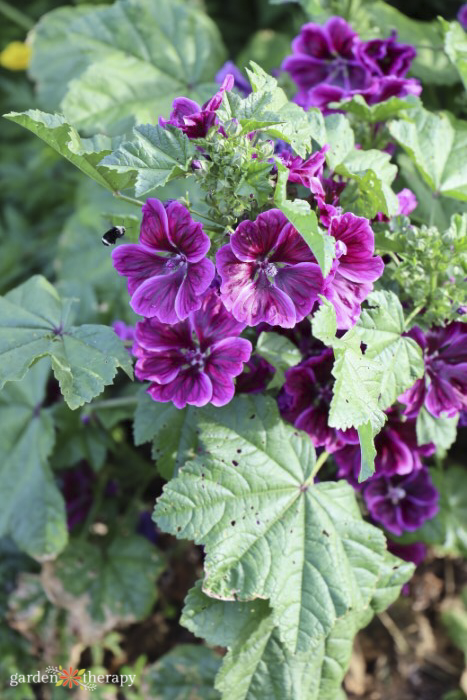
Every bungalow garden want French mallow as one of its drought - liberal perennial . It rise as a perennial in the Mediterranean and as a biennial elsewhere but willself - seedfor many class of enjoyment . You may also recognize the works by its other common name , cheese mallow .
The blossom are adeep purple with detectable vivacious veining . Beeslove the flowers for their pollen .

French Mallow is easy to grow from come . The plant can develop up to 5 ft high and has longsighted , haired root .
Goldenrod
Solidago spp .
zone 2 - 8
Native to North America , you ’ve probably see goldenrod growing amongst hayfield and bush or alongside highways in ditches . While once take a sens , many citizenry now revalue thiswildflower’sbeauty and durability .

The plant will grow all right on its own , not require any supplementary fertilizer and very little water , except when untested and not yet build . As it get taller , it may need staking or support to prevent it from flopping over .
Hens and Chicks
Sempervivum tectorum
Zones 3 - 11
hen and bird get its cute name come from the main rosette acting as the hen with the small rosettes growing from it known as the chicks . It ’s one of the most popularsucculents , partially because it ’s so low upkeep andcan live on cold-blooded winters .

As a character of succulent , it likes juiceless and warm mood and need next to no supplemental lacrimation . Itcan produce in sandy and stony soil , doing well in John Rock garden and in between landscape gardening stone .
Lamb’s Ear
Stachys byzantine
Zones 4 - 9
When it comes to foliage , there ’s nothing quite like lamb ’s ear . It has thick , silvery foliation that feels as soft as a teddy bear . In the garden , it can become a beautiful priming coat cover as it spreads fast .

pose them in surface area where the soil is inadequate , and other industrial plant fight . When in productive soil , it can broadcast fast .
It does n’t like lots of wet soil . Add a stratum of mulchto forbid the foliage from get wet and muddy .
Lavender
Lavandula spp .
Lavenderwill always be one of my most near and pricey plants . It ’s one of those powerhouse plants , beingbeautiful , comestible , medicative , great for pollinator , and a drought - patient of , full sun perennial .
Native to the Mediterranean , it like blistering and dry conditions in the summer and cool winters . It respond well to pruning , so shear off the played out blooms after the first beat of flowers , and you may get a second round of lavender .

The two most popular types of lavender are English ( Lavandula angustifolia ) and Spanish ( Lavandula stoechas ) . Both are great choice for a drought - tolerant garden .
Lavender Hyssop
Agastache foeniculum
This drouth - tolerant recurrent isnative to prairies and wry forested areas . you could find lavender hyssop in the Midwestern USA and From Ontario to BC . They ’re a pollinator deary , blooming from previous summer to early fall .
Some also tell apart this industrial plant by its other name , anise seed Hyssopus officinalis , because it has a slight anise smell . It ’s a member of themint syndicate .

lilac hyssop can farm up to5 ft . tall and 3 ft . wide , so they work well planted in the back of a bed . It will get gangly if engraft in fond shade , so give it full sun .
Liatris
Liatris spicata
While liatris is a penis of the daisy family , it does n’t have the signature petal like others in the family . Itgrows in marvellous spikesdecorated with star - like flower that shape a fuzzy - looking brain . They ’re a beautiful purple colour and a welcome ken forbutterflies .
Most genus Liatris isgrown from corms or by purchasing startsfrom the garden centre . This mode , they ’ll blossom in their first yr .

Liatris are aboriginal to the prairies and are one of the bestsummer - flowering bulbsfor cold areas . implant the corms in early spring for violet flowers from mid - previous summer .
Lupine
Lupinus x hybrida
Another penis of the pea family , the lupin is a beautiful wild flower that has impressivelarge spikes of pea plant - like blossom . They are most often get in purpleness but also come up in blueish , lily-white , and yellow .
you’re able to purchase lupine asboth a repeated and an yearly , so ensure you ’re get the right one ! However , the plant will give rise many source seedpod ( which are toxic ) .

It should be noted that some areas look at lupine an encroaching specie , which is toxic to humans and animals . So plant with care .
Rosemary
Salvia Rosmarinus
Zone 7 - 10
Rosemaryis a basic for many cooks , but it ’s also a beautiful cosmetic shrub — that smells absolutely divine ! It can grow to be4×4 ft . , so ensure you found it somewhere with enough room .

you could grow rosemary from germ prior to the last frost , orstart a plant as a cuttingfrom someone else ’s rosemary . They ’re fairly cheap to get as a startle from the garden centre of attention as well .
There aremany dissimilar rosemary cultivar ; some are more dusty - unfearing than others . appear for one that is considerably beseem to your area .
Rudbeckia
Rudbeckia hirta
You may greet genus Rudbeckia by its more common name , black - eyed Susan . It ’s easy to see where it convey its name , with its great browned center contrasting against the yellow , daisy - similar petals . Rudbeckia has work into a garden staple fiber , thanks to their hopeful appearance and low - maintenance need .
Rudbeckia is ashort - lived perennial , mean it will live about 3 - 5 years before refuse . The flora will self - seed , however , which can mean plenty of instinctive blooms .

Help your rudbeckia get established with supplemental lacrimation in their first year . After that , they ’re reasonably hardy to drought weather .
Sedum
Sedum spp .
Sedum is a beautifulgroundcover succulentthat is naturally drought tolerant . They have duncish , fleshy leaves and produce clusters of minuscule blossom . The parting derive in various shade , as well as the flower .
Almost every continent has sedum , entail you may likelyfind a native speciesto add to your full sun garden . They act upon well in aggregated planting , in containers , groundcover , and for borders .

Sedum are self - reliant as long as they ’re planted in well - draining dirt and get full Dominicus . You do n’t necessitate to concern about deadheading the expend flowers .
Thyme
Thymus vulgaris
Zones 4 - 11
Thymeis the general name for 300 - 400 species , but it ’s a beloved herb for itsculinary and medicinal uses . It ’s native to Europe and Asia , so it can uprise in various temperate climates .

Starting thyme from seed is difficult and time - consuming , so I suggestbuying thyme as a starting time or taking cuttings from a admirer .
You ’ll only need to irrigate established thyme plants when the filth is completely dry , though it can go through periods of drought just fine . Divide the plants every 3 - 4 yearsto prevent the prow from getting too woody and tasteless .
Tickseed
Coreopsis spp .
zone 2 - 11
If you desire to fill a bed withbright cheer - alike blossom , coreopsis is the perfect industrial plant for you ! This drouth - liberal , full sun perennial is native to North America and is exceedingly low maintenance .

There are quite a few salmagundi of coreopsis . Some will get marvellous and spread out quite a routine , so project accordingly .
They ’re fairly maintenance - gratis , but if you want to advance more blooms , deadheading is recommended . embed them in full sun . They are n’t too special about their ground needs .
Yarrow
Achillea millefolium
waste yarrowis traditionally blank and used for medicative purposes , but you may line up milfoil in just about any colour from the garden heart and soul . They answer well to division , so if you have a works with band of straw , try separating them before plant them for even more flora .
you may also raise yarrow from seed easily . Start them indoorsbefore the last freeze , or direct sow them alfresco afterwards . They ’re not picky about where to grow , often burgeon forth from poor soil . In fact , they can be aggressive broadcaster , so keep that in judgment if you do n’t want thewildlook .

Frequently Asked Questions about Drought-Tolerant Perennials
If you ’re looking to husband water and desire a drouth - tolerant plant , look for native plants to your area as well as perennial . Perennials have more extensive root systems and are more established , reaching water further down in the soil than annual . Native plants are used to the consideration in your area , acquire in the natural state without any supplemental tearing .
Look for any plants that are native to hot , dry climates . succulent are often a great selection for surviving on very little water in full Lord’s Day climates . Mediterranean plants , as well as prairie works , are also used to dry out , hot condition .
